


- by Vadym Chalenko
iPhone 18 Pro Camera Rumors: What We’re Most Excited About for Mobile Filmmaking
- by Vadym Chalenko
Apple’s September event is always one of the most exciting times of the year if you’re an iPhone filmmaker or photographer. At Beastgrip, we’ve been following the iPhone 18 Pro rumors for quite some time, not just because there’s a new iPhone coming, but because several rumored changes could have a real impact on how the iPhone performs as a camera.
As always, none of this is official until Apple announces it. But with the event just a few days away, there are some rumors we're especially interested in: variable aperture, possible camera and sensor changes, a new processor, battery and thermal improvements, and changes to the camera size.
Of all of them, variable aperture could be the most interesting, especially for filmmakers.
The main camera on the iPhone 17 Pro and several generations before it uses a fixed ƒ/1.78 aperture. In other words, the physical aperture stays wide open all the time.
Multiple reports suggest Apple could change that with the iPhone 18 Pro generation by introducing a physical variable aperture on the main camera.
Exactly how Apple will implement it remains unclear. Earlier rumors pointed toward both Pro models, while more recent reports suggest variable aperture could be exclusive to the iPhone 18 Pro Max.
More importantly, we still don't know the actual aperture range.
There has been speculation about a significantly wider range, potentially opening beyond the current ƒ/1.78 and stopping down considerably. Until Apple announces the camera, however, any specific aperture numbers should be treated as speculation.
Still, let's imagine a range of approximately ƒ/1.4 to ƒ/4 to understand why this could be such an interesting feature for mobile filmmakers.
If Apple increases the maximum aperture from the current ƒ/1.78 to around ƒ/1.4, there would be two immediate benefits: more light and more natural optical background blur.
Assuming the sensor size, focal length, subject distance and framing remain similar, moving from ƒ/1.78 to ƒ/1.4 could theoretically produce blur circles roughly 27% larger.
It would also let in approximately 60% more light, or around two-thirds of a stop.
On a smartphone's relatively short focal-length main camera, that isn't suddenly going to create the extremely shallow depth of field of a full-frame camera. But it could still be noticeable, especially when focusing close to a subject.
And this is where external lenses become particularly interesting.
A faster main camera could potentially make some external lens combinations even more creative.
With a telephoto conversion lens, the longer effective focal length already helps create stronger subject separation. Combine that with a wider native aperture and close focusing, and that additional optical background blur could become much more noticeable.
A wide-angle conversion lens presents a different opportunity. Wide lenses naturally provide greater depth of field, but they can also create very dynamic close-up compositions. Getting very close to a foreground subject while shooting at a wider aperture could produce an interesting combination of exaggerated perspective and stronger natural background separation.
We're especially curious to see what roughly 25% more optical blur would actually look like when combined with different external focal lengths.
These are exactly the kinds of tests we want to perform if Apple gives us a wider physical aperture.
This gets even more interesting with our upcoming patent-pending Beastgrip DOF Adapter Фoton.
Unlike our DOF Adapter MK3, Фoton doesn't use a focusing screen. It optically relays the image from a full-size camera lens directly into the smartphone camera.
The final depth-of-field characteristics therefore depend on the complete optical system, including the camera lens attached to Фoton and the smartphone camera itself.
If the new iPhone can physically open wider than the current ƒ/1.78, there's potential for Фoton to benefit from that as well. In theory, a move toward ƒ/1.4 could add even more optical background separation to the complete system.
How noticeable will it be? That's something we'll need to test on the actual device.
We'll be sharing much more about Фoton soon.
Opening the aperture is only half of the story.
For filmmakers, the ability to stop the physical aperture down could arguably be even more useful.
Imagine, for example, that Apple allowed the main camera to go from the current ƒ/1.78 all the way to approximately ƒ/4.
Going from ƒ/1.78 to ƒ/4 reduces incoming light by approximately 2.3 stops, leaving only about 20% of the original light.
That's a significant amount of built-in optical exposure control.
This could be extremely useful when shooting video.
If you're shooting 24 fps and trying to maintain approximately a 1/48-second shutter speed for natural motion blur, today's fixed ƒ/1.78 aperture can quickly become a limitation outdoors.
Once the camera reaches its minimum ISO, your usual options are to increase shutter speed or add an ND filter.
A physical aperture that can close significantly would give filmmakers another level of exposure control.
For example, an exposure requiring approximately 1/250 sec at ƒ/1.78 would get close to 1/50 sec at ƒ/4, assuming ISO remains unchanged.
That's roughly 2.3 stops of light reduction just from adjusting the aperture.
It wouldn't eliminate the need for ND filters. Bright daylight can require considerably more light reduction. But in many shooting situations, overcast conditions, golden hour, window light and other moderate environments, it could make maintaining a cinematic shutter speed much easier.
And because this would be a physical aperture, it's real optical exposure control rather than a computational effect.
There's another creative side to stopping down.
At the same focal length and focus distance, moving from ƒ/1.78 to ƒ/4 would significantly increase depth of field.
We usually hear about smartphone cameras trying to create more background blur. But sometimes deeper focus is exactly what you want.
Landscapes, architecture, documentary work, action shots, product shots and scenes with multiple subjects can all benefit from having more of the image naturally in focus.
Instead of always shooting the native camera wide open, filmmakers could potentially have another genuine optical control over the look of the image.
This is one of the things we're most curious to test at Beastgrip.
Modern external smartphone lenses have become more challenging to design as phone cameras have moved toward larger sensors and faster apertures. One potential advantage of variable aperture is the ability to stop the native camera down, which could help external lenses perform even better, particularly toward the edges of the frame.
We've actually seen this before. Older Samsung Galaxy devices with variable aperture often produced better results with external lenses when the native camera was stopped down, with improved edge performance and a more consistent image across the frame.
To be clear, our current Beastgrip Pro Series lenses already perform exceptionally well with today's iPhone cameras. With current optics, we may be talking about the kind of incremental improvements you notice when pixel peeping, but those improvements still matter when you're trying to get the absolute best image from a professional mobile camera setup.
The benefit could become more noticeable when shooting landscapes, cityscapes, architecture, establishing shots or distant subjects with wide-angle, telephoto and anamorphic lenses. In these situations, you're often focused toward infinity and want deep focus with clean detail and consistent sharpness from the center toward the edges of the frame.
A smaller aperture could potentially give us both: deeper focus and more consistent edge performance.
And here's another interesting possibility: stopping down could potentially breathe new life into some older external lenses that were designed around previous generations of smartphone cameras with smaller sensors and different optics.
A lens that struggles toward the edges on today's fast, larger-sensor smartphone cameras might behave differently when the native camera can be stopped down.
Will that actually happen on the new iPhone? We don't know yet, but we're definitely going to find out.
If the rumors are true, variable aperture could bring more than exposure and depth-of-field control. It could potentially improve overall consistency with external optics, give filmmakers another way to optimize image quality for a particular shot, and perhaps even make some older lenses worth taking off the shelf again.
We'll be testing it across our Beastgrip Pro Series wide-angle, telephoto, anamorphic and fisheye lenses, along with some older optics, as soon as we get the new devices in our hands.
The effect could be different with our DOF Adapter MK3.
The MK3 uses a physical focusing screen. A full-size camera lens projects its image onto that screen, and the smartphone camera captures that projected image.
Because the depth of field and bokeh have already been rendered onto the focusing screen by the attached camera lens, changing the iPhone's aperture should not change the depth of field created by the DOF Adapter MK3.
However, stopping down the iPhone camera could potentially improve edge detail when capturing the focusing screen.
There could also be tradeoffs. Greater native depth of field could make the focusing-screen texture more visible, and we may see changes in vignetting or other characteristics.
We simply won't know until we test it.
And if stopping down doesn't provide an advantage with the DOF Adapter MK3, that's fine too. Using the new camera around the aperture we're accustomed to today should maintain a similar optical relationship to current iPhones.
The DOF Adapter Фoton is different because there's no focusing screen between the camera lens and the smartphone.
Variable aperture could therefore potentially become another useful control within the complete optical system.
Opening the iPhone aperture could favor maximum light transmission and stronger background separation. Stopping it down could provide deeper focus, additional exposure control and potentially improve performance across the image.
One important distinction is that stopping down the smartphone camera isn't the same as stopping down the full-size lens attached to Фoton. They affect the optical system differently, and simply stopping down the attached camera lens doesn't provide the same type of benefit with Фoton that you might expect from a traditional camera setup.
We'll go much deeper into how all of this works when we share more details about Фoton.
There have also been rumors surrounding changes to Apple's main camera sensor, including reports that Apple is developing a significantly larger sensor for future iPhones.
But it's not clear that this larger sensor is actually coming to the iPhone 18 Pro generation.
Some recent reports indicate that the major sensor-size increase may belong to Apple's longer-term camera roadmap rather than this year's device.
That's why we're not making assumptions yet.
We're also interested to see whether Apple maintains approximately the same 24mm-equivalent field of view on the main camera.
The relationship between sensor size, actual focal length, equivalent focal length and aperture matters, not only for Apple's own camera performance, but also for how external optics interact with the native camera.
We will have answers soon.
Not every important camera upgrade has to be a lens or sensor.
The iPhone 18 Pro models are widely expected to use Apple's new A20 Pro chip, reportedly manufactured using a 2nm process. Rumors also point toward battery and thermal improvements, particularly on the Pro Max.
Those improvements matter for filmmaking.
High-resolution recording, high frame rates, ProRes, computational processing and extended recording sessions all generate heat and consume significant power.
Better efficiency, more battery capacity and improved heat management could translate into longer recording times and more consistent performance under demanding shooting conditions.
For us, these are part of the camera system just as much as the lenses and sensor are.
The physical design is another area we're watching closely.
Current rumors and leaked dummy units suggest changes to the overall dimensions of the iPhone 18 Pro models, with the camera system in particular expected to become thicker and protrude farther than the current generation.
We don't yet know the final dimensions, exact camera positions or how much the individual lens openings will change.
For Beastcage, even very small differences matter.
Beastcage isn't a universal or loose-fitting phone cage. It's a precision-machined system designed around the exact dimensions of each device, including its body, cameras, buttons and ports.
Historically, every new iPhone generation has brought dimensional or design changes that matter for this type of precision fit.
So one thing we can say already: there will be new Beastcage models for the next iPhone Pro generation.
Once we have verified dimensions and the actual devices in hand, we'll finalize the new designs and test every part of the system.
Beastgrip Pro is a different story.
It's universal and adjustable by design, so the dimensional changes currently rumored for the new iPhones shouldn't fundamentally affect compatibility.
Based on everything we know today, we also don't see anything suggesting our existing Beastgrip lenses shouldn't work with the next-generation Pro cameras.
Of course, we'll verify optical performance on the actual devices before making final compatibility claims.
In fact, we're particularly excited about the opposite possibility.
If Apple introduces meaningful physical aperture control, the next iPhone could potentially give Beastgrip users more control over how external optics perform.
A wider aperture could provide more natural background separation and additional low-light capability, while stopping down could potentially improve edge performance with certain external lenses while providing deeper focus and additional exposure control for video.
So while a new generation means new precision-fit Beastcages, the universal Beastgrip Pro and our existing lens ecosystem should continue doing exactly what they were designed to do: adapt to new devices, and potentially take advantage of new camera capabilities as they arrive.
There's one final question that could determine just how useful all of this becomes for filmmakers:
Will Apple actually give us manual control over the aperture?
We're hoping the answer is yes.
It would be disappointing if variable aperture were used only as an automatic function, with the iPhone deciding when to open or close it. That could still improve Apple's computational photography, but for professional video, the real value comes from being able to choose the aperture and keep it there.
If we want ƒ/1.4 for maximum light and background separation, let us select it. If we want ƒ/4 for deeper focus, slower shutter speeds or potentially better performance with external optics, let us select that instead.
We're also very interested to see how quickly third-party camera apps can take advantage of it.
Blackmagic Camera is the first one we'll be watching. Blackmagic has been remarkably quick to support new iPhone filmmaking capabilities in previous generations, so if Apple makes physical aperture control available to developers, we would expect Blackmagic to be among the apps pushing it further.
Apple's own Final Cut Camera is another obvious one to watch.
Ideally, aperture will become another manual camera parameter alongside ISO, shutter speed, white balance and focus.
We don't know yet whether that's how Apple will implement it. The aperture could be continuously adjustable, limited to several physical positions, partly automatic, or handled in another way entirely.
But considering the filmmaking direction Apple has taken with the Pro iPhones over the past several generations, we hope this isn't simply an automatic exposure feature.
We'll find out very soon.
There are a lot of rumors every year. Some are accurate, some are partially accurate, and some disappear the moment Apple starts its presentation.
For mobile filmmakers and photographers, these are the questions we're watching most closely:
How wide can the main camera aperture actually open? How far can it stop down? Can we control it manually? Will third-party camera apps have access to it? Has the sensor changed? Is the main camera still approximately 24mm equivalent? How much has the physical camera system changed? And what does all of this mean when we put professional external optics in front of it?
Those answers are much more interesting to us than another spec-sheet comparison.
We'll be watching Apple's event closely. And as soon as we get the new iPhones in our hands, we'll start testing them with Beastgrip Pro, our Pro Series lenses, DOF Adapter MK3 and the upcoming DOF Adapter Фoton.
And, of course, we'll get to work on the new Beastcages.
Stay tuned. There's a lot more coming.
iPhone 18 Pro & 18 Pro Max: Beastgrip Gear Compatibility & First Tests
Great news for iPhone 18 Pro and 18 Pro Max users: Beastgrip rigs, lenses, DOF Adapter MK3, and accessories are compatible and working great. Here’s a quick compatibility update, including Beastcage options and what we’re seeing from our first tests with the new variable aperture.
Read moreabout iPhone 18 Pro & 18 Pro Max: Beastgrip Gear Compatibility & First Tests
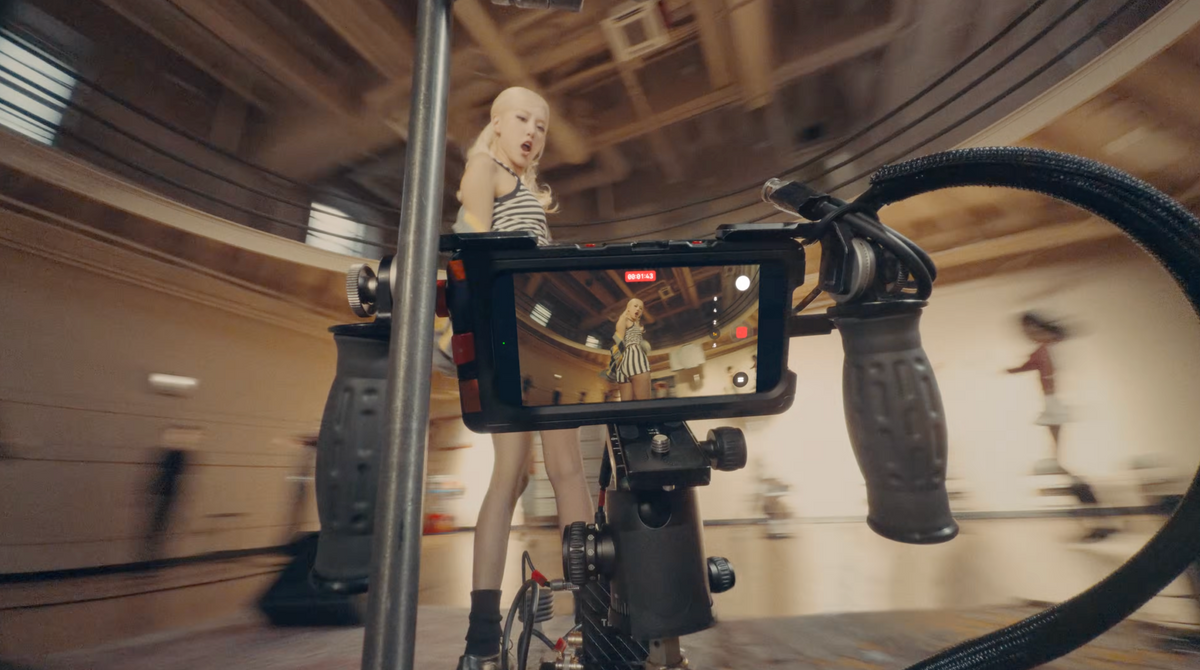
ROSÉ’s “New Trick” Music Video Shot Entirely on iPhone 18 Pro
ROSÉ’s “New Trick” was shot entirely on iPhone 18 Pro. Go behind the scenes to see Beastcage in action across gimbals, body rigs, creative camera setups, and more.
Read moreabout ROSÉ’s “New Trick” Music Video Shot Entirely on iPhone 18 Pro
iPhone 18 Pro Camera: What’s New for Mobile Filmmaking & Photography
Apple just unveiled the iPhone 18 Pro and Pro Max. We take a closer look at the new camera system, variable aperture, manual controls, performance upgrades, and what they could mean for mobile filmmaking, photography, and Beastgrip gear.
Read moreabout iPhone 18 Pro Camera: What’s New for Mobile Filmmaking & Photography



Share:
Singer: A Short Film Shot on iPhone 17 Pro
iPhone 18 Pro Camera: What’s New for Mobile Filmmaking & Photography